


Has anything changed? Yes, on paper, as it were. There are organisations which provide phone lines for children to report all kinds of abuse, including bullying. There are numerous websites which supposedly give guidance-to children, parents, teachers-on how to spot a bully or a bullied person, how to prevent or stop it, how to speak out, what to say to school staff and family. I am in no way criticising any of them and certainly they are a step forward. Children need not find themselves stuck in the dark and terrible tunnel of fear and silence in which I found myself when I suffered cruelty at Michael's hands. Parents and teachers are much more aware of the issue than they were and are nowadays prepared to try and help.
But I am afraid that the kind of sadistic person who takes pleasure in terrorising others, making them afraid, watching them squirm, threatening, taunting, finding new and more secret ways to hurt and go on hurting, is clever and cunning. Adults are no match for them. The fear of what will happen if a word is said-a very real fear of very real cruel deeds-still prevents victims from speaking out. It is exactly the same syndrome as in the adult criminal world-say anything and . . .
What possible help and advice can we give child victims of bullying? Is it any good at all reassuring them that a bully's bark is always worse than his or her (a lot of the worst bullies are girls) bite, or saying, "Sticks and stones may break my bones but names will never hurt me?" You have first to get the measure of your bully. Undoubtedly, most are "all mouth and no trousers"-most, but not every one. Some would have no hesitation in carrying out their threats, when pushed. And names and verbal abuse are sometimes the very worst things to endure. A quick thump may sort out a passing argument and even a Chinese burn does not hurt for long. But what can be said, to frighten, belittle, shame and make unhappy is almost without limit, and the words can be seared on a vulnerable young mind for life. I still remember many of the things Michael said to me. I still go hot at the mocking laughter directed at someone whose mother wore such hideously embarrassing hats.


- The US Can Still Help Save Syria — and Iraq
- Russian Resurgence has Blindsided Nato
- On Europe, Nothing Less than Treaty Change will do
- Putin has his Useful Idiots on the Left and the Right
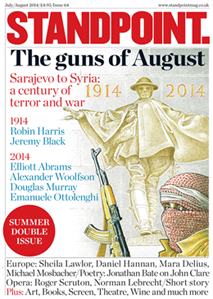
- Sarajevo: Where the Century of Terror Began
- Allen Lane’s Pelicans Take Wing Once More
- How Not to Remember the First World War
- Opera is Not Just Our Most Expensive Noise
- Jonathan Miller: One Man, Two Cultures
- Without a Big Idea, Cameron Will Lose
- A Christian Country? No, a Conservative One
- How to Get School Competition Right
- The War on the Firmest Bulwark of our Liberty
- How Modern Liberals Created Nigel Farage
- Caught in the Trap of His Own Metaphysics
- In Search of My Father, Agent of the Comintern
- Geoffrey Hill and the poetry of ideas
- Master of the Glories of the English Country Garden
- Independence Will Do Nothing for Scots
- Bullying and Bluff on the Road to Referendum

- Conduct Unbecoming: The Classical Commentaries of Norman Lebrecht in Standpoint
- Propaganda Shouldn’t Pay
- The US Can Still Help Save Syria — and Iraq
- A Putrid Pact between Devils
- Strangers in their own Holy Land
- The Taboo of the Tombola
- Putin has his Useful Idiots on the Left and the Right
- Jihad at the Jewish Museum
3:08 AM
2:12 PM
10:12 AM
12:12 PM