


Intrinsically optimistic, and incredibly comfortable in his own skin, he says that if his premiership ends before then he will always have his family to fall back on.
Yet underneath the faux modesty and the liberal Anglican sense of detachment the Tory leader is also an intensely competitive creature. An Old Etonian well used to the bar of White's — a club he resigned from reluctantly ahead of becoming PM for fear of bad publicity over its men-only policy — could hardly be anything else. Indeed, it is difficult to imagine David Cameron being content to fail. Is he pleased with the idea of his premiership turning out to be of little consequence and of him ending up an unremarkable historical also-ran? At this point greatness doesn't appear to be on the agenda.
The Cameron record so far might politely best be described as mixed. He narrowly made it to Number 10, an achievement which eluded his three predecessors. But in opposition he fixated for far too long on the attempted "detoxification" of his party's "brand" and encouraged by an equally cautious George Osborne foolishly accepted Gordon Brown's leftist framing of the economic debate (signing up to a "share the proceeds of growth" consensus of high tax-and-spend). The Tory leadership couldn't say "we told you so" when the crash eventually came because they hadn't.
Then there was the matter of the general election, in which the absence of a clear Conservative message meant that voters were rightly confused about what on earth they were being offered. The resulting hung parliament produced a coalition with Nick Clegg that initially pleased a certain kind of liberal Conservative and voters who like their politics with any notion of combat removed.
But in the 18 months since it was formed the coalition has drifted. Osborne started well by promising deficit reduction, although the figures since suggest that those cuts are proving difficult to deliver. For all the hype, spending is much higher now than it was a year ago.
On Europe the coalition has made much of its introduction of a supposed "referendum lock", which will require future changes to treaties to be put to a national vote. Yet, simultaneously it has been defeatist and accepted the extension of European powers in all manner of areas such as justice and, catastrophically, regulation of the City of London.
Of course, in the credit column there are important reforms being implemented in welfare by Iain Duncan Smith and in education by Michael Gove. But in health Cameron — encouraged by Osborne, who thinks Cameron should present himself as a "safety-first" prime minister in the mould of Stanley Baldwin — abandoned attempts to introduce greater market discipline into the NHS.


- The US Can Still Help Save Syria — and Iraq
- Russian Resurgence has Blindsided Nato
- On Europe, Nothing Less than Treaty Change will do
- Putin has his Useful Idiots on the Left and the Right
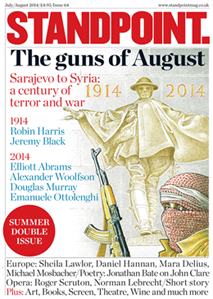
- Sarajevo: Where the Century of Terror Began
- Allen Lane’s Pelicans Take Wing Once More
- How Not to Remember the First World War
- Opera is Not Just Our Most Expensive Noise
- Jonathan Miller: One Man, Two Cultures
- Without a Big Idea, Cameron Will Lose
- A Christian Country? No, a Conservative One
- How to Get School Competition Right
- The War on the Firmest Bulwark of our Liberty
- How Modern Liberals Created Nigel Farage
- Caught in the Trap of His Own Metaphysics
- In Search of My Father, Agent of the Comintern
- Geoffrey Hill and the poetry of ideas
- Master of the Glories of the English Country Garden
- Independence Will Do Nothing for Scots
- Bullying and Bluff on the Road to Referendum

1:09 PM
5:09 PM
1:09 PM
11:09 AM
10:09 AM
10:09 AM
10:09 AM
10:09 AM
11:09 PM