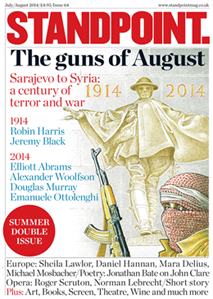

You are here:   Barack Obama > Russian Resurgence has Blindsided Nato
 

In this new security environment it is the European allies that face the biggest challenges as the postwar equilibrium based on a Franco-German partnership comes under threat. First, they need to appreciate the seriousness of recent events and link both Russia's actions and the strategic dimension of popular dissatisfaction with the EU. The EU should no longer maintain a monopoly in the European political imagination as the guarantor of continental stability. Second, they need to reaffirm their commitment to Nato, not just through rhetoric but by putting aside national interest to agree new strategic priorities: defence and deterrence. Third, they will have to increase their share of defence spending and bolster the semi-permanent basing of Nato troops on the eastern edge of the  alliance.

Nato urgently needs to digest the new European military reality. While its future strategy should be a return to collective European defence, the reality is that it will look nothing like the counterinsurgency operations of the past decade, nor the type of planned continental war that defined the previous 50 years. The response will ultimately have to be based on unified strategic agreement, reinvigorated defence spending and carefully rethought changes in the alliance's force structure, so that rapid reaction really is rapid.

Most importantly as Russia continues to exploit the liminal space between invasion and full de-escalation, America and its European Nato allies need to reconsider their "red lines" for escalating sanctions or possible military action. They also need to re-examine their self-imposed prohibition on the use of force, for without it there can be no effective deterrent to future aggressors.
View Full Article
 
Share/Save


Max
July 14th, 2014
3:07 PM
This summer will be remembered for the flow of lies and stupid articles.

Vlad
July 14th, 2014
9:07 AM
This man really believes in true democracy. When I read, I thought it was a woman over 50. Too naive and idealized.And what kind of aggression it? Crimea territory which for over 200 years is Russia. And more than 200 years, there are Russian troops. Most of the people there, all these 200 years were Russian. When it is in a part of Ukraine, all the past 23 years, they are perceived as a misunderstanding.Therefore, after the illegal political coup organized by U.S. taxpayers' money in order to bring to power a pro-American government, people are simply people in the Crimea did not recognize him and declared independence. Whether they supported Russia? Yes. As well as the United States in a similar situation would have supported.And funny to remember about the fact that the referendum is not unconstitutional government which came to power through unconstitutional. Constitution or valid or not. No middle ground. At the time of the referendum, the constitution has already been deposed.

Halappa
July 14th, 2014
6:07 AM
The only aggressors in the modern world - NATO and USA.

Baron
July 13th, 2014
1:07 AM
Spot on, Mr. James.

Lawrence James
July 9th, 2014
11:07 AM
Alexander Woolfson’s strident bugle call for intervention in the Ukraine and the Crimea combines a misunderstanding of history with discordant echoes of music-hall Russophobia. His speculation about whether Nato could somehow have mobilised forces for dispatch to the Crimea invokes that jingo chorus of 1854: “Let’s raise a mighty cheer,/We’re going to the Crimea,/We’ll tame the Russian bear.’ Having abjectly failed to ‘tame’ the equivalent beasts in Iraq and Afghanistan, we should know better. As for the context of recent events in the Ukraine, Woolfson disregards Russia’s historic experience and misunderstands Nato’s purpose. The alliance was the product of the Cold War created solely to resist Soviet encroachments on Western Europe and not to make land grabs across the borders of the former Russian empire. Wisely, it did not take advantage of the implosion of the Communist state in the 1990s and repeat the Allied intervention during the Russian civil war of 1918 to 1920. Yet, something along the lines of this catastrophic enterprise is now being contemplated as a solution to the Ukrainian crisis by overheated champions of Nato engagement in what has always been accepted as a Russian sphere of influence. Russia has made it plain that she regards the former Czarist and Soviet province of the Ukraine as a de facto province. There are valid historic reasons for this. The French invasions of 1812 and the German of 1918 and 1940 taught Russians that their land mass was the best means of defence. Since the eighteenth century the Ukraine has been a vital part of this vast glacis. Russia is also nervously aware that on the two latter occasions a substantial number of Ukrainians defected to the invaders. Likewise, Russia has a legitimate claim to the Crimea, as strong, say, as the United States has to Puerto Rico, Hawaii, and its sundry Pacific island naval and air bases. If a section of the population of any one of these outposts chose to spurn their patrons and attach themselves to their rivals, gunboats or their modern counterparts would soon be in action. Their use would be justified by the same arguments as Russia has deployed over the Crimea. Post-Cold War geo-strategy has seen a reversion to traditional assumptions and methods. We live, as we did in 1914, in a world of official and unofficial empires and spheres of influence. This being so, there is an excellent historic case for the Ukraine staying within the orbit of Russia and the Crimea returning to Russian sovereignty. Acceptance of a status quo upheld by history is infinitely preferable to a policy of shifty intrigues with malcontent Ukrainians and sending absurdly tiny detachments of Nato soldiers to camp out in the forests and marshes of Lithuania.

Post your comment

CAPTCHA
This question is for testing whether you are a human visitor and to prevent automated spam submissions.