


I have always felt uneasy when historians or politicians sound off about sea-changes in history, claiming that the emergence of Islamism, terrorism, globalisation, climate change or whatever has transformed the world. I could not repress a snort of derision when I heard that Francis Fukuyama had published The End of History. But lately, I have been obliged to accept that fundamental changes have taken place in the past two decades, mainly as a consequence of the collapse of the Soviet imperium.
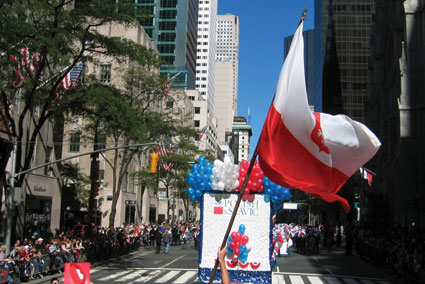
The catalyst for this reassessment came from an unlikely quarter: I was asked by my publisher to revise and update The Polish Way: A Thousand-Year History of the Poles and their Culture, a history of Poland which first came out in 1987. When I began writing that book, more than a quarter of a century ago, the study and writing of history had changed little since my schooldays, despite the fashion for microhistory, gender studies and Marxist revision (Eric Hobsbawm was at the height of his reputation). The perspective was relentlessly British, and European history was hardly touched on. When it was, the only countries that figured were those that impinged, one way or another, on British interests: France, Russia, Prussia and, at various points in their history, Holland, Sweden, Spain and Portugal. I was made acutely aware of this since the country I was interested in, Poland, was not among them. One only has to look through the indexes of books on European history published at that time to appreciate this: Poland was usually only cited as an example of what we now call a failed state, a kind of historical joke.
My only comfort was that Italy was also treated as something of a joke and Italy was definitely worth studying, for its own reasons. So, I felt, was Poland. Having travelled widely in it, I knew it was no joke. Indeed, it seemed in many ways to be a more serious place than Britain. It was there and in Czechoslovakia that the vital issue of the day, the contest between human liberty and totalitarianism, was being fought. Sitting down to write its history in the early 1980s nevertheless represented a challenge, to put it mildly. The first step was, clearly, to try and understand how and why it had "failed".


- Admit It, Mr Kerry: You Blundered
- Bismarck Versus Blair — A Foreign Policy Crossroads
- Arab Spring, Islamist Summer — What Next?
- The Diplomat the Whole World Ignores
- The Blob Has Run Schools For Decades. Not Any More
- Would You Intervene — Or Pass On The Other Side?
- He Died That Others Might Live In Peace
- The Hero's Journey is Hollywood's McMyth
- Online Only: Countering the Counter-Jihadists
- Online Only: The Price Paid for Criticising Islam
- 'Please Sir, I Just Want to Learn More'
- Why Students Should Be Glad To Pay Tuition Fees
- A 'Liberal Racist'? Me? I Felt Like a Heretic
- Demolish the Relics of Yesterday's Future
- Was Britain Right To Go To War In 1914?
- German Victorians Who Helped Transform Britain
- The Alternative History of an Undivided India
- Online Only: Heirs to the Left
- ONLINE ONLY: The Hayward Gallery's Fashionable Primitives
- ONLINE ONLY: A Spiritual Corner of Southwark

- The Zombie Argument that Refuses to Die
- Online Only: The Price Paid for Criticising Islam
- Overrated: Dan Brown
- Is the Brain the Key to Understanding Religion?
- Overrated: George Monbiot
- Time to Wise Up to the Muslim Brotherhood
- 'Please Sir, I Just Want to Learn More'
- The Alternative History of an Undivided India
- The Zombie Argument that Refuses to Die
- Online Only: The Price Paid for Criticising Islam
- Overrated: Dan Brown
- Is the Brain the Key to Understanding Religion?
- Overrated: George Monbiot
- Time to Wise Up to the Muslim Brotherhood
- 'Please Sir, I Just Want to Learn More'
- The Alternative History of an Undivided India
- Decline and Fall of the History Men
- Uncritical Theorists Who Misread the Nazis
- The Zombie Argument that Refuses to Die
- The Banality of Hannah Arendt
- From Kitsch to Cool: Picasso and Modern Art
- Is the Brain the Key to Understanding Religion?
- Time to Wise Up to the Muslim Brotherhood
- Midfield Virtuoso Finds His Perfect Pitch
1:10 PM
8:08 PM