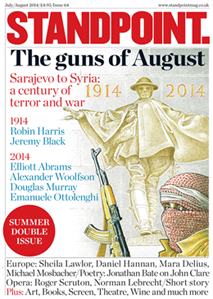



Until the end of the 18th century, war was an extremely effective vehicle for the conduct of policy, and victory brought enormous gains, politically and economically-one only has to consider the rise of Prussia under Frederick the Great or Great Britain's country's fabulous harvest in terms of wealth and dominion from the Seven Years' War. That became less and less true as the 19th century progressed, and looking back over the past 100 years it is not easy to point to many wars that have brought the victor much in terms of economic or political benefit. Recently, even successful military operations have produced profoundly negative effects, such as a huge political deficit at home and condemnation abroad, not to mention an increased exposure to terrorism, as both the US and Israel have learnt to their cost. Conventional war is also becoming increasingly difficult to wage, since every state in the world is economically connected at some level, and even the most dictatorial absolutist regimes find it more and more difficult to inspire or force their people to fight. Russia's invasion of Georgia last year cost her tens of billions in terms of foreign investment, even if it did bring Putin and Medvedev a political bonus at home. Her attempt to use gas as an economic weapon is also ultimately doomed to failure, since treating customers as enemies will inevitably drive them away. Also, invading Eastern Europe would only enslave a large number of her customers, thereby making them unable to pay, which would be counter-productive. However impractical and therefore unlikely conventional war might be, this does not mean we should disarm and repeat the mistake made by the Poles in the 16th and 17th centuries. There are still plenty of states out there bent on aggression - one only has to think of Russia, China and Iran. The real question facing us now is to find the weapons with which to defend ourselves.
History throws up more questions than answers. But one lesson to be learnt from the past couple of centuries is surely that European Christian humanist civilisation, with its fruits of democracy, civil liberty and all the rest, is in itself a very powerful weapon. Whether one agrees with the late Samuel Huntington's vision of a clash of civilisations or not, it cannot be denied that what preserved the Poles in the face of immeasurably superior odds and unspeakably ghastly ordeals were those very values. And sometimes it is necessary to lose a battle or two in order to win a war.
Although I had to take the best part of a year rewriting a book I had hoped to buff up in a matter of weeks, I found the work curiously comforting, as it confirmed me in my conviction that soft values triumph and that faith in human dignity does win out in the end. In our search for security we must never forget this. As President Obama said on his first day in office, the choice between safety and ideals is a false one.


- The US Can Still Help Save Syria — and Iraq
- Russian Resurgence has Blindsided Nato
- On Europe, Nothing Less than Treaty Change will do
- Putin has his Useful Idiots on the Left and the Right
- Sarajevo: Where the Century of Terror Began
- Allen Lane’s Pelicans Take Wing Once More
- How Not to Remember the First World War
- Opera is Not Just Our Most Expensive Noise
- Jonathan Miller: One Man, Two Cultures
- Without a Big Idea, Cameron Will Lose
- A Christian Country? No, a Conservative One
- How to Get School Competition Right
- The War on the Firmest Bulwark of our Liberty
- How Modern Liberals Created Nigel Farage
- Caught in the Trap of His Own Metaphysics
- In Search of My Father, Agent of the Comintern
- Geoffrey Hill and the poetry of ideas
- Master of the Glories of the English Country Garden
- Independence Will Do Nothing for Scots
- Bullying and Bluff on the Road to Referendum

- Conduct Unbecoming: The Classical Commentaries of Norman Lebrecht in Standpoint
- Propaganda Shouldn’t Pay
- The US Can Still Help Save Syria — and Iraq
- A Putrid Pact between Devils
- Strangers in their own Holy Land
- The Taboo of the Tombola
- Putin has his Useful Idiots on the Left and the Right
- Underrated: Tony Abbott
1:10 PM
8:08 PM