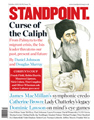



Politicians throughout Europe nowadays remind us that, as German Chancellor Angela Merkel recently remarked, “Germany’s frontiers begin on the Hindu Kush”. The Foreign Secretary, David Miliband, has also confirmed that 70 per cent of British terrorist plots have some link to Pakistan. But one has yet to hear a British politician of any stripe talk about what changes they wish to see in the Muslim world — for example in Saudi Arabia, to whom we sell arms in return for passively accepting their citizens’ funding of subversive religious activities here in Britain. By contrast, Nicolas Sarkozy’s imaginative plan to give North Africa (and Israel) EU associate status suggests that he has expanded his horizons since 9/11 and is not transposing the Cold War on to our relations with global Islam.
Anything that serves to strengthen more liberal Muslim voices in Indonesia or Turkey, vis-à-vis a Gulf world which many Arabs and North Africans themselves abominate, is worth encouraging. The Turkish ministry of religious affairs has boldly sought to conform the Hadith — the sayings attributed to the Prophet Mohammed on which so much of Islam depends — to life in the 21st century.
It may be that the dictators — the Assads, Bouteflikas, Mubaraks, Gaddafis and others — will cling on to power much longer than optimists may imagine. However, should that not happen, how will the West help those moderates who will find themselves in temporary oppositional coalitions with reformist elements of these regimes and the Islamists? For it is useful to remember that in 1992 some 300,000 people demonstrated in Algiers under the slogan “no to a police state, and no to rule by clerics”. How do we ensure such a coalition does not go the way of the one that toppled the Shah of Iran, after which Khomeinites imprisoned or murdered their secular allies? If such forces fail to coalesce, how will the West persuade regimes which restrict oil and gas profits to narrow elites to reinvest them in developments that might benefit the unemployed young of these countries? The alternative of turning a blind eye to rampant corruption, while such regimes exploit the war on terror to crush democratic opponents as well as fundamentalist protest voters, is morally untenable.
We began with a US Senate committee confronting unthinkable horrors. Our policy-makers apparently prefer to focus on the conceit of exporting Northern Ireland’s idiosyncratic model of “conflict resolution” as far away as Sri Lanka. This smacks of a last spasm of self-congratulatory post-imperial hubris, or “punching above our weight”. How strange for Des Browne or Jonathan Powell to be talking about dialogue with Hamas, Hezbollah — with whom the British are not at war — and the Taleban (or in Powell’s case even al-Qa’eda) when we can’t even get on top of a local difficulty with Anglo-Pakistanis that threatens the lives of passengers flying to or from British airports.


- Migrant Crisis? Europe Hasn't Seen Anything Yet
- Why Palmyra Should Matter To The West
- Corbyn's Rise Makes Cameron Redundant
- No, Jeremy: Politics Is All About Borders Now
- Why 'Lady Chatterley' Still Provokes Us
- For Climate Alarmism, The Poor Pay The Price
- Will Putin's Empire Outlast The Soviets?
- British Witnesses To Lenin's Revolution
- Bibliophiles Beware: Online Prices Are A Lottery
- How Jeremy Corbyn's Coup Hijacked Labour
- Corbyn's Signpost Back To The Ghetto
- Unionists, Don't Despair: Scotland Is Not Lost — Yet
- Britain's Apologists For Child Abuse
- Lift The Fee Cap And Set Universities Free
- The Story Behind One Dead Man's Penny
- Hitler's 'Ecological Panic' Didn't Cause The Holocaust
- Meet The Montalvos: The First Global Family
- Mr Gove, Here Is Our Statute of Liberty
- A British Bill Of Rights
- Something For Nothing Just Won't Do Any More

7:07 PM
6:06 AM
7:06 AM
9:06 AM
6:06 PM
7:06 PM
6:06 PM
9:06 AM
7:05 PM
3:05 PM