




There have been rumblings in the US film industry that headline names are not justifying their bloated pay-cheques. But despite this, and the onslaught of the computer-animation industry, the old-fashioned concept of the movie star has shown remarkable powers of survival. The music industry may have fragmented and, the occasional Lady Gaga notwithstanding, big stars of a Madonna magnitude may have been niche-ed out of existence. But cinema still manages to produce personalities whose names (to use Bogart's famous litmus test of fame) are known in Karachi.
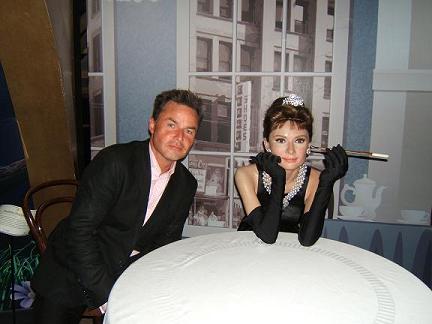
I saw evidence of this recently when I took my two God-children to Madame Tussaud's in London for a holiday treat. Cheapened and in thrall to current transient celebrity it might be, Tussaud's is still a failsafe guide to what is deemed necessary if one wants to be recognisable to hundreds of thousands of people from all parts of the globe. Historical figures have largely disappeared, along with most British kings and queens; there is just one painter (Picasso) and, along with Shakespeare, a mere two writers (Dickens and Wilde). Television too, is barely represented — an illustration perhaps of its declining power and essential parochialism. But there are movie stars galore — Brad, Tom, Leonardo, Johnny, all being poked, fawned over, photographed with, adored. Alongside sports stars, film actors appear to make up the biggest single contingent in this galaxy of the modern great and good.
But something has changed. The concept of movie stardom is alive, and there's an evident and constant supply of those aching to make it flesh (and wax). But the people are not the same.
Walk along a little way at Tussauds and in an adjoining room you will see a few remnants of the Golden Age — Marilyn Monroe, Audrey Hepburn (snapped here with your correspondent), and unfashionably enough, John Wayne. The contrast could not be more marked. Compared to the knowing, adult femininity, the urban sophistication and the frontier resourcefulness represented respectively by just these three, our stars seem provincial and young, like superannuated Prom kings and queens. There is no untouchable quality. They have no hinterland. They are sexy and buff, certainly, but worldly — let alone other-worldly — they are not.
In other words, and with the odd exception, they have no real glamour. This is down not to an intrusive 24-hour media, or the cynicism of our age, or any of the other reasons usually put forward for the tarnishing of the silver screen idol. It is due solely to the cult of youth which rules virtually all aspects of our culture. Youth and glamour are incompatible: as Joan Collins once said, there is no such thing as a glamorous baby. When, as Rhett Butler, Clark Gable was giving his final brush-off to Scarlett O'Hara, he was 38 years old, a full ten years younger than our own Tom Cruise. Gable appeared like an experienced man-of-the-world, who'd put childish things behind him. Cruise on the other hand is a perpetual Peter Pan, an eager beaver who relies on his impetuous energy for his appeal. When she was perfecting ‘The Look' in To Have and Have Not in 1944, Lauren Bacall was barely 20. Both Gable and Bacall were still young — but they aspired to adulthood. We no longer do. And so we get the movie stars we deserve.


Post your comment
Peter Whittle is director of the New Culture Forum. He is UKIP's culture spokesman.
- After more than ten years, founder of Standpoint magazine Daniel Johnson stands down as Editor
- Standpoint needs your help — one last time
- Donations to Standpoint will be matched £ for £
- Friends of Standpoint — Donations matched £ for £
- Brexit Revolt – The insider account of the EU referendum
- We need your help and support
- Standpoint Presenting Two Debates At HowTheLightGetsIn 2016
- The Compleat Corbyn — a round-up of Standpoint's Corbyn coverage this month

- Sir Raymond Carr in Standpoint
- Conduct Unbecoming: The Classical Commentaries of Norman Lebrecht in Standpoint
- Chronicling The Crash: A Standpoint Ebook
- Grounds for Hope
- Is Islam a Peaceful Religion? Daniel Johnson at the Oxford Union
- Standpoint's Autumn Salons
- Win Tickets to the Inaugural Standpoint Salon
- Is Hunter's History Bunk?
- Lawson Collects on Climate Change Bet
- The Cabinet meeting that kept Salman Rushdie alive
- Friends of Russia or Friends of Putin?
- Russia's Win-Win Election
- The Kremlin Plays Old Tricks With Pussy Riot
- A Pyrrhic Victory for Georgian Democracy
- Abandoned in Moscow
- Standpoint's New Facebook Page
- No need to pander to the Bear, Mr Obama
- Govemania
- Standpoint Recommends: The Tacitus Lecture 2012

- The inevitability of Fortress Europe
- The way forward for Europe’s great outsider
- The devout sceptic: hope for those of little faith
- Corbyn waves the flag of anti-Semitism
- In Corbyn’s mind, there is no place for the Jews
- Corbyn's road map to a communist Britain
- Is the mental illness epidemic just a myth?
- Women storm the podium